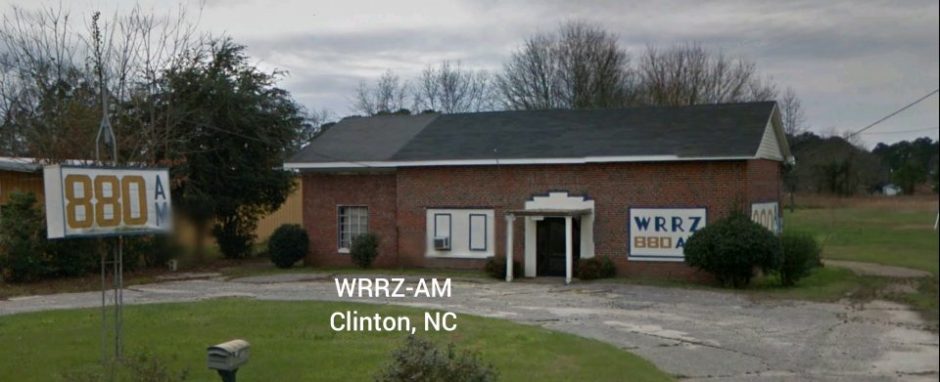
John S. is a person who has worked in Radio, and asked me to post this and see what people think
There are far too many AM stations in the USA, especially at night. I suggest that the FCC start removing licenses and freeing up frequencies. I do see value in keeping a dozen high power AM stations nationwide to blanket the country in case the internet is down and there is a regional outage of media, but that should be digital rather than analog.
For the FM, the same thing- there are too many stations. Close some of them down to free up bandwidth.
What to do with the bandwidth? Re-allocate it (rather than auction it) to cell phones for higher speed internet. Require the land line phone and cable companies to put WIFI on their telephone poles.
The bigger saving will be from TV- take back the broadcast spectrum recently allocated to HDTV and encourage the stations to stream their content over the internet.
So if I’m reading this right, he’s proposing to eliminate virtually all terrestrial broadcasting and somehow reallocate it to cable, satellite and the Internet.
This guy seems to think that all bandwidth is the same, that somehow the same 800 MHz frequencies used for Wi-Fi are just as effective as the ~100 MHz band of FM or even the ~1 MHz of AM. It doesn’t work that way.
The other problem is how you provide local service. This is especially the case with TV. The thing about broadcast licenses is they’re not just a license to operate a tower and blast out tens of thousands of watts of TV signal. It’s also a license that allows you guaranteed coverage on cable systems. It seems that John, by eliminating this, would also eliminate the must-carry system as well, and with that the incentive to provide local programming vanishes.
The Internet is grossly disorganized. Unlike radio and television, where you have limited bands of linear channels neatly scheduled, the Internet is quite literally all over the place. If you think radio and TV is crowded, golly, I’d hate to see how he’d describe the Internet. Heck, if it weren’t for those massive things known as search engines, it would be practically unnavigable.
So basically if he wants to turn mass media into a total, confusing mess, that’s the plan we should follow.
Over time, “local” seems to have less and less of a meaning. While there are regional variations, more and more of American commerce is being dominated by a handful of brands – Home Depot, Lowe’s, Target, OfficeMax, Staples, McDonald’s l, Subway, Wendy’s, Applebee’s, Outback Steakhouse, Red Lobster, Walmart, CVS, Walgreen’s, Old Navy, Bed Bath & Beyond, Amazon. National brands you can market on national TV backed by an efficient distribution system don’t leave a lot of room for “local” business.
The “what about an energency?” argument has been used by the NAB and the AARL since the creation of the FCC, when regulation of radio was moved out of the Commerce Department by Herbert Hoover. It sounds convincing except it is hard to point to examples where it mattered to save lives, 9/11 being the most obvious example. TV and Radio weren’t used to get word out what to do. The bad planning of having almost all of the TV and radio signals on the same building demonstrated the lack of foresight – only mitigated because even in 2001 most people had access to the local TV stations on Cable.
People are not stupid and don’t need a government shepherd. As the events became clear, people left their offices and started walking home. People improvised solutions to problems, most people survived. Humans are not as fragile as the government wants to convince you to believe. Believe you are helpless to solve your own problems and trust the government as your protector and you’ll wind up trapped inside the Superdome without food, water, electricity and stepping over the dead bodies.
I always fall back on the EMP device. If Iran or Russia pops a big enough EMP attack across the US, all of this discussion is moot. Nothing electronic will work. If you want to analyze for emergencies, I cannot think of a bigger one. Certainly, radio, TV, Internet and cable are all OOC after such an attack.
Get rid of AM and FM in favor of the Internet and Cell phones? Maybe. I still listen to radio (via streaming) and I still watch local news for the weather. My phone is really a computer in smaller format. I think of what I think is useful on TV and I can answer that we shoud shed TV stations to eliminate clutter and reallocate their bandwidth to the Internet. No one really watches TV on the internet – no one has an attention span longer than a millisecond.
Interesting proposition all in all.
Well living in a Rural area, I do not subscribe to crazy Dish system or Cable company, not that it would be any better, because I do not pay for TV advertisements. TV programs make money by selling ads. I am not double paying for advertisements. I receive TV signal over the air. Granted, I watch very little TV, but semi local news and weather is important. Local radio goes off the air at 6pm and you can’t pick up anything on AM anymore in the evenings. FM is drone-automated and they do not keep up with local important weather statements.
Just about all we can depend on is local TV news & weather for important information. Local Radio has gone dead. It is a sad situation.
LOL on trying to get verizon to provide “WiFi” on their poles. Heck they don’t even cut the trees off the lines anymore. Verizon is worthless, all they want to do is sell a ‘plan’.
Some localities still have a local radio station that is active and is integrated into the community. That is becoming the exception. Its almost generational I think.
maybe ‘John’ ought not worry about it. It will work itself out. It seems every time they have messed with station ownership rules they (FCC) has made things worse. That’s why it seems all radio stations sound a like or have the same programming these days.
so just leave it alone. They have screwed it up enough as it is.
I saw a story on C/Net about a device Verizon is pushing – an LTE hotspot. I think this is the “end game” Instead of maintaining copper wires on poles, replace it with a few fiber optic cables into neighborhoods that then feed an LTE mesh. You then have an LTE hot spot in the house with no wires at all – receiving LTE service from Verizon and then operating as a WiFi router indide your house – and possibly a mini cell phone tower (although with Skype and similar products its getting hard to make people pay per minute cell phone charges when they are connected to wifi at home)
This AM discussion may become moot if the electric company “smart” service continues to wipe out long range reception with the data noise being broadcast from all the electrical lines. I live in a rural area and nighttime reception has becone terrible in the last few years.
Once people in America are solely dependant on the ‘best’ available information sources, all other information sources can (will) be shuttered and therefore all local information that is not ‘approved’ to be disseminated, will in affect never be disseminated.
Sure, the airwaves and internet will be chock full of information and access, but……
The Pony Express did have some redeeming value, as do local sources of information. I suppose there may be a need to think about setting up local ‘information networks’ but which remain private, as opposed to publicly controlled.
Not really a good idea . “Freeing up bandwidth” at this wavelength would not create any further room for the Wi-Fi type of communication which has already devoured a huge amount of spectrum to allow in part people to text while they are behind the wheel of a motor car .
The AM broadcast band is just fine and at night a good source of longer range radio coverage .
Since the OP has mentioned that he actually worked in radio (No mention of exactly what he did) , his motives are of possible interest . It would be a pity to lose a fine resource like the AM broadcast band to settle an individual grudge from a sore loser .