Bloomberg had a news story yesterday about a possible shortage of Cashews, which is why this became interesting.
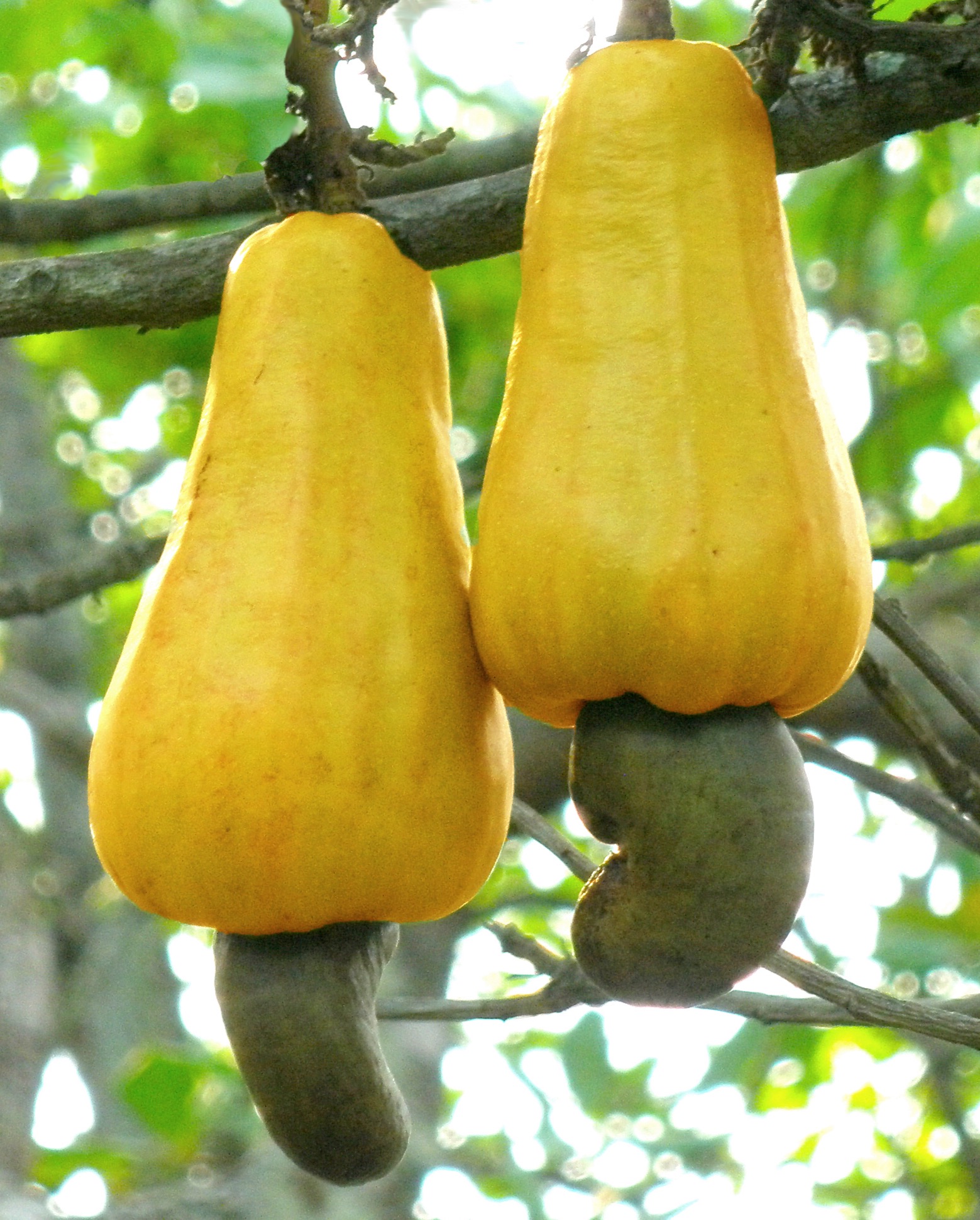
That’s how they are grown. The cashew tree grows fruits and the cashew nut is at the bottom. The fruit itself is edible and has an interesting juice apparently. The cashew itself is hostile. Inside the outer shell, there is a sticky substance the same as in poison ivy.
Processing them is extremely labor intensive and unpleasant – a perfect match with the available labor pool in Vietnam. Vietnam is where most Cashews come from – India is the only close competitor, but that is largely for domestic consumption.
The cashew tree was found in the Caribbean – it has no tolerance for frost and wants lots of rain and direct sunlight. The global community has been pushing back on the use of “child slave labor” to harvest cacao pods used to make chocolate – primarily Ivory Coast, Ghana and Nigeria.
Through some odd coincidence cashew harvesting in those countries just exploded in the past few years. It takes about 5 years for a cashew tree to start bearing fruit.
While West Africa is becoming a major grower of cashews, most are not processed there. In the shell Cashews can last about 2 years without deteriorating, so they are being put on ships and sent to Vietnam from processing. Vietnam is using automation to make the process less labor intensive.
Vietnam processes about 1.3 million metric tons a year or about 2.8 billion pounds
Cashews are not only being used to hide child laborers, but corruption and money laundering as well. http://vinacas.blogspot.com/2016/05/ivory-coast-billions-missing-cashew.html
I saw anti-child slavery billboards in the Ivory Coast. They were all smack dab in the city (on the freeway, and in the middle class areas). They were not in the elite downtown or in the rural areas where there are actual child farm laborers.
The stats in Vietnam show a huge gap between quantity grown, quantity processed and “reported” imports. Since half of all Cashews are grown in West Africa, it doesn’t take rocket science to figure out.
Wow! You are correct. The Brazil Nut is a seed from a coconut-like fruit. It takes 14 months to mature and can only be pollenated by a certain species of Bee.
I don’t care for Brazil Nuts, but that is an amazing look into another “nut” we take for granted.
And kind of like the cod story, as they get scarcer and the price goes up, the incentive to harvest even more goes up. Between the loss of habitat, the taking of most of the seeds and the way they reproduce with animals spreading the seeds, all that is left is the old trees and they’re dying off. I’m fairly sure I also read about this in the 1990s in Insight magazine (Washington Times). “what country harvests the most Brazil nuts?” would be a great trivia question. In a more general sense, crops that depend on bees for pollenstion might all be in trouble. Once there are no almonds, I guess we’ll have to survive on Asian carp
Yes child slavery and money laundering are problems. I am fascinated by the fact that a cashew isn’t a nut and that, like saffron (crocus pistils/stamen) the harvesting process is pretty intense.
Brazil nuts are probably even more interesting. It’s possible they’ll become an extinct plant
Fascinating. I remember as a kid in Puerto Rico (my dad was stationed at Ramey AFB) hearing the word in Spanish “anacardos” (cashews acc. to Google Translate) which is related to the word meaning “thistles.” By extrapolating Greek and Romance it sounds like “virgin thistles” or “weeds.”
Most locals ate the fruit which was quite delectable when fully matured but a bit binding on the tongue, while discarding the actual nut.
There is a poll up asking people where they think cashews are grown, and an alarming number think they are grown in the United States. How can that be? Here is a hint from the can from Walmart.
I wonder what “packaged in” actually means to people in Jersey City, Jersey? Know what I mean?
Their state of the art processing facility is about two blocks from the container unloading facility for ocean vessels, and has an active rail connection. They are SQF 2000 level 2 certified!
http://www.sqfi.com/
“One World, One Standard”
http://www.starsnacks.net/
It’s time to make American Cashews great again! Mr Peanut is tanned and ready.