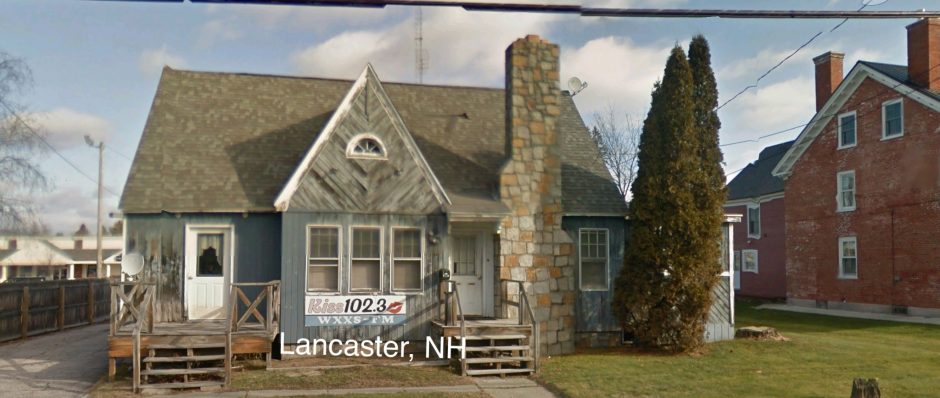
FCC rules currently prohibit “cross ownership” – where the local newspaper also owns radio or TV stations in the same town. The thinking was that concentrated too much power in one company. There are a few grandfathered situations like the Chicago Tribune owning WGN.
The FCC is looking to relax the rule, but not end it
http://mobile.broadcastingcable.com/article/476909-FCC_Proposing_Leaving_Local_TV_Radio_Ownership_Caps_In_Place.php
It would create a new process where the FCc would make a subjective evaluation in a case by case basis, which has the distinct odor of setting up a system of political shakedowns to get that approval.
Of course, any such federal program will be properly “diverse”. Not only a good way to “increase diversity” in Radio Station ownership, but the process would also work in reverse — i.e. a “majority” owned newspaper chain seeks to buy the “Smith” Chain of stations — the FCC says “no, unless…” you “improve” your company’s ‘diversity’ by turning it over to an “approved” set of properly “diverse” candidates.
Media and broadcasting regulation Chicago style, baby!
I don’t suppose FCC could be replaced with something wild and crazy like free enterprise? Government and government byblows (“agencies”) need to heavily Bosai’d. Or, even better, Agent Oranged.
The FCC was a creation of “Free Enterprise” – specifically the NAB. The NAB predates the Communications Act of 1934 and “the Act” was essentially written by the NAB to enforce its view of how Radio should be regulated. At the time, there was an ongoing feud over how frequences would be allocated, with non-commercial AM stations complaining that the money interests of “Big Radio” at that time were trying to force them off the air….
I think about this from time to time. As a mostly libertarian, I don’t like most of the FCC’s ideas – on the other hand, there can’t be no rules – having radio and TV be like CB radio with anyone who wants a station could just put up an antenna and start broadcasting on whatever frequency they wanted with as much power as they wanted is not the answer either.
One idea is to make it generate revenue on a competitive basis – the current licensing does nothing to weed out the folks who are not using their licenses effectively, and encourages stations to demand the largest possible protected service area.
Mirroring the “rule of thumb” of how radio station values are determined, perhaps a “per person” annual fee based on the service area covered by the station. Let’s just say a fee of $.05 per person per year. So a station like WABC-AM might have to pay $500k a year for its license. If it can’t afford that, then one option would be to apply to the FCC to reduce power so it only covers New York City, and not all of Long Island, New Jersey and much of Connecticut. That would free up the adjacent frequencies (760 and 780) to create new local stations or the existing neighbors on 760 and 780 to increase their power. This fee would apply to all AM and FM stations, including non-profits. If you owned a local station that served a population of 20,000 people, you would pay $1k a year.
What this would do (among other things) is drain the speculation from the value of the FCC licenses, which are essentially an asset of unlimited duration created solely because someone at some time in the past got the FCC to give them a license. New licenses are now auctioned using competitive bidding rather than just given because you filled out the paperwork and asked for it and paid off your local Congress person to call the FCC to push it through. But even so, that bidding process is tainted with political distortions like giving preference to “historically disadvantaged groups” and giving a prefence to people with no prior experience in running a radio station.